Word Go: Word Link Puzzle
Infinite Joy Ltd.Word
4.53.23K Reviews
- Version
- 1.28.0
- Installs
- 1.00M
- Age Rating
- Everyone
Screenshots
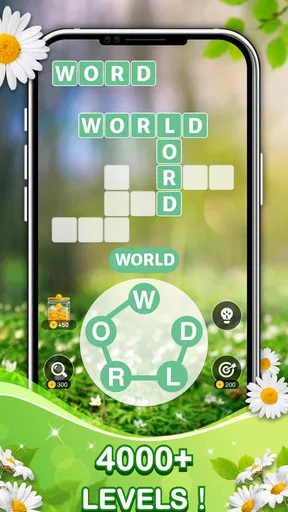
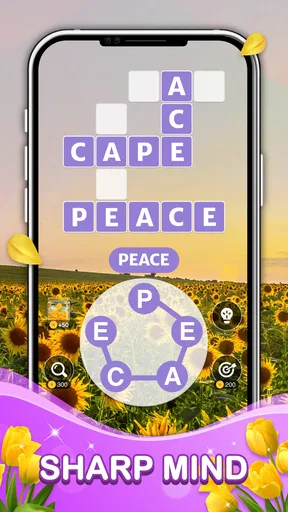
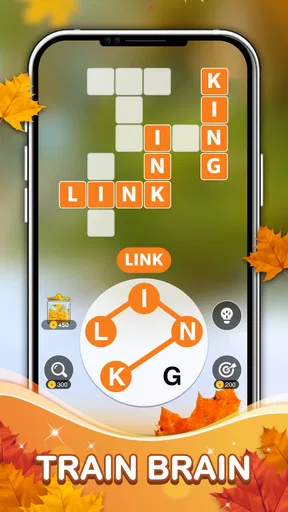
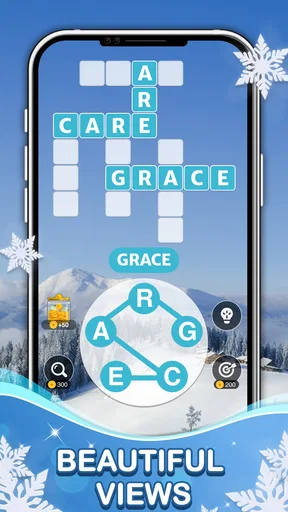
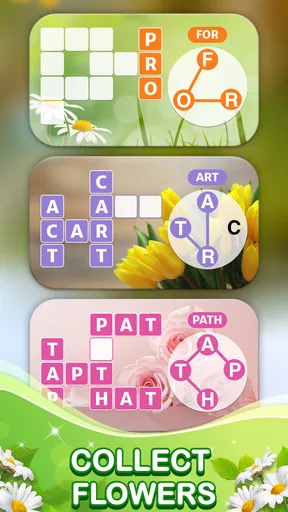
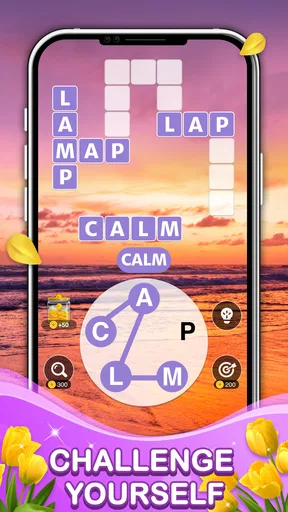
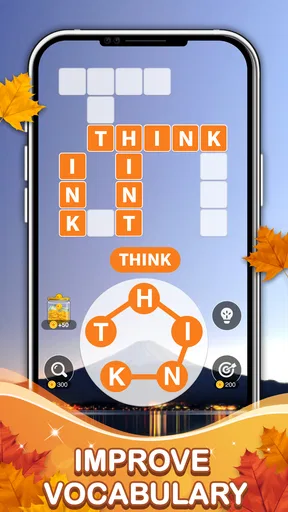
Our Review of Word Go: Word Link Puzzle
 Analysis by Appyee
I went into Word Go: Word Link Puzzle expecting a simple word game for filling a few spare minutes, and that is exactly where it makes the strongest impression. You connect letters, test a possible word, see immediately whether the board accepts it, and then decide whether to keep exploring or move on. The action is easy to understand, but the small cycle of attempt, response, progress, and restart is what makes the game surprisingly easy to return to.
This is a free word game from Infinite Joy Ltd. It is aimed at Everyone, runs on Android versions from 8.0 onward, and has reached over a million installs. Its average rating sits at 4.5 from around fifteen thousand ratings, which matches my general impression: it is approachable, lightweight in concept, and better suited to relaxed play than to serious competitive word training.
How the word-linking loop feels in actual play
When I get stuck, I try to separate a hard board from a rushed approach: I pause, scan the available letters again, and test a different connection rather than repeating the same guess. That small reset helps me decide whether I still want to work through the puzzle or would rather leave it for later. The next useful step is making sure the app and device are ready for a smooth session.
The first move is almost frictionless
The best thing about the opening moments is that the game does not ask me to learn a complicated ruleset before I can begin. I look at the available letters, trace a possible connection, and receive an immediate response. That first action matters because it removes the hesitation common in larger puzzle games. I am not choosing a character, building a deck, or studying a tutorial. I am simply looking for a word.
That simplicity also makes the game easy to recommend to someone who wants a casual brain exercise rather than a demanding hobby. A short break at work, a quiet few minutes before bed, or a commute with enough attention for a puzzle can all suit this format. The game’s store summary describes it as a way to calm and train the brain, and in my experience the calming part is more convincing than the training claim. It encourages concentration, but it is not a replacement for a structured vocabulary course or a serious word-learning tool.
The first useful habit is to avoid committing to the most obvious word immediately. I found it more rewarding to scan the whole letter arrangement first, looking for short connections and possible longer words before making a move. This gives the board a little more shape in my mind and reduces the feeling of randomly dragging across letters. It also helps when an early choice leaves fewer useful possibilities later.
Every correct connection creates a clear rhythm
The feedback is the heart of the experience. A successful word gives me a small sense of confirmation, while an unsuccessful attempt tells me to adjust without making the mistake feel costly. That rhythm is gentle: act, receive feedback, inspect what remains, and try again. Because the response comes right after the gesture, I rarely feel disconnected from the puzzle.
What keeps the loop moving is that each answer changes what I see next. Even when the underlying task remains familiar, the board invites a fresh scan. I start by searching for the easiest connection, then switch to looking for unusual combinations, overlooked short words, or a route that might open a more useful possibility. The mental activity is modest, but it is active enough to keep a passive few minutes from feeling empty.
I also like that the game can be played without the pressure associated with a timer-focused word challenge. If you prefer racing a clock, competing against other players, or chasing a visible personal record, this may feel too quiet. Word Go works better when the reward comes from noticing a solution rather than beating an opponent. It is a distinction worth making before downloading it, because the same word category can contain very different moods.
A practical approach is to treat failed attempts as information instead of wasted moves. When a connection does not work, I use that response to narrow the possibilities: perhaps the letters need to be joined in another order, or perhaps I was looking for a familiar word while the board was encouraging a different one. This mindset keeps the game from becoming frustrating and makes the feedback more useful than a simple right-or-wrong signal.
Why the reward is modest but effective
The reward in this kind of game is not a dramatic story event. It is the satisfaction of completing a small pattern and seeing the puzzle move forward. That modest payoff suits the scale of the sessions. I can finish a brief round and feel that I have done something, without needing to reserve a long uninterrupted block of time.
For me, the strongest reward appears when a board initially looks limited and then reveals more possibilities. I may begin with one obvious word, assume the rest will be straightforward, and then discover that the remaining letters require a more deliberate search. The transition from recognition to problem-solving gives the game enough variation to avoid feeling like a pure reflex exercise.
The free entry point is another part of the reward structure. I can try the core experience without paying upfront, which makes it easy to see whether the calm pace suits me. There are in-app purchases ranging from $0.99 to $79.99 per item, so I would advise checking purchase prompts carefully if the device is shared with children or if you prefer to keep casual games completely cost-free. The game is rated Everyone, but that age rating should not be confused with a promise that every optional purchase will suit every player.
I would also keep expectations realistic about vocabulary growth. The game encourages me to notice spelling patterns and think flexibly, but it does not turn every session into a lesson with definitions, pronunciation guidance, or a study plan. Someone learning English systematically would be better served by a dedicated language app. Someone who already enjoys word puzzles and wants a relaxed way to exercise attention will get more from it.
The reset is what makes another session tempting
A good casual game needs a clean stopping point, and this one benefits from the fact that a puzzle can feel complete without demanding a large commitment. Once I finish a board, I can put the phone down rather than feeling that I have abandoned a campaign. That makes it useful for fragmented time: a short wait, a pause between errands, or the final few minutes before sleep.
At the same time, completion creates a natural reason to begin again. The next board presents a new arrangement, so I am not merely repeating the exact same visual problem. The reset changes the immediate challenge while preserving the familiar rules. That combination is important: too much novelty would make the game tiring, while too little would make it mechanical.
My advice is to use the reset deliberately. If I am playing because I want to relax, I stop after a satisfying puzzle instead of automatically starting another. If I am using it to wake up my attention, I begin a new round and set my own limit before I start. Since the game’s appeal comes from its repeatable loop, it is easy to continue longer than intended, especially when the previous board ended with a satisfying solution.
This is also where the game differs from a traditional crossword or a large word-search book. Those alternatives often reward a longer sitting and let me return to an unfinished grid. Word Go feels more disposable and immediate: solve the current arrangement, enjoy the response, and reset. That is convenient, but players who love deep, persistent puzzles may find the experience too light.
Small tactics that make the boards more enjoyable
My first tactic is to search in layers. I begin with the shortest obvious words, not because they are always the best answers, but because they help me understand the board’s available paths. Then I look for a longer connection that uses the remaining letters more efficiently. This is more reliable than repeatedly dragging at random, and it gives each move a purpose.
The second tactic is to pause after a successful answer. It is tempting to immediately hunt for the next word, but a brief scan of the changed board often reveals a route I would otherwise miss. The visual reset after each correct connection can make familiar letters look different, so slowing down for a moment is surprisingly useful.
Third, I avoid treating one stubborn board as a test of intelligence. If I am tired, I make more impulsive guesses and overlook ordinary combinations. In that situation, restarting my attention is more effective than forcing the puzzle. A short break, followed by a fresh look, often makes the same arrangement feel less blocked. This is one reason I see the game as a calming routine rather than a strict performance challenge.
Finally, I would not judge the game only by how quickly I solve a board. The better measure is whether the interaction gives me the kind of pause I wanted. If I need fast competition, advanced word definitions, or a persistent achievement system, the usual alternatives in those areas are likely to be stronger. If I want a low-pressure sequence of letter connections with immediate feedback, this particular format is well matched to that purpose.
Where the experience can lose momentum
The same simplicity that makes Word Go accessible can also limit it. Once I understand the basic connection mechanic, the game does not have to teach me much else. Players who need several layers of strategy, a rich narrative, or a strong social component may run out of reasons to stay engaged. The loop is pleasant, but it is intentionally narrow.
There is also a difference between being relaxing and being endlessly fresh. A few sessions can feel nicely focused, while a longer stretch may begin to feel repetitive because the central action remains the same. I would use it in short bursts rather than expecting it to replace every other puzzle game on my phone. That choice makes the repetition feel like consistency instead of a weakness.
Purchase options can be another point of friction for people who prefer a completely uninterrupted free experience. The game costs nothing to start, but optional items can reach a high price for a casual word title. I would recommend deciding in advance whether you are comfortable with purchases and keeping device payment controls in mind. That is especially sensible when the game is available to younger players under its Everyone rating.
The Android requirement is reasonably broad, since the game supports version 8.0 and later, but anyone using an older device should check compatibility before planning around it. The current version is 1.28.0, so I would also keep the app updated through the normal store process when possible. That is less about changing the core appeal and more about avoiding the inconvenience of running an outdated build.
Who should play it, and who should skip it
I would recommend Word Go to people who enjoy word games but do not want the intensity of a timed duel. It is a good fit for casual players, families looking for an Everyone-rated title, and anyone who likes a small mental reset during an otherwise busy day. It is particularly suitable if you enjoy discovering a solution through trial and visual scanning rather than writing long answers into a large grid.
I would be more cautious recommending it to players who want a serious vocabulary curriculum. The game can make me think about letters and word patterns, but its main purpose is play. It is also not my first choice for someone seeking competitive leaderboards, multiplayer pressure, or a complex progression system. A crossword app, a spelling trainer, or a word battle game may provide a better match depending on the goal.
For a realistic everyday example, I can imagine opening it while waiting for an appointment. I solve one puzzle, stop when my name is called, and later return without needing to remember a story or rebuild a complicated strategy. On another day, I might use a single round as a transition between work and rest. The value is not that it transforms the day; it gives a small, controlled activity to a moment that might otherwise become aimless scrolling.
My verdict on the complete action-feedback-reward-reset cycle
After spending time with it, I see Word Go as a focused casual word game whose appeal depends on repetition done well. The first action is clear, the feedback arrives at the right moment, the reward is the satisfaction of completing a connection, and the reset makes another board feel available without creating a heavy commitment. That cycle is simple, but it is coherent.
Infinite Joy Ltd. has built something that understands the value of a small session. The game does not need a complicated explanation to become playable, and its 4.5 average from around fifteen thousand ratings suggests that this straightforward approach has found a receptive audience. I would not call it a deep word-learning tool or a major strategic challenge, and I would keep an eye on optional spending, but those are fair trade-offs for its relaxed design.
My recommendation is simple: try it if you want a free, approachable word puzzle for short breaks and gentle concentration. Skip it if you need competition, detailed language instruction, or substantial long-term progression. For the right player, the reason to start another session is not a dramatic reward; it is the pleasant promise that one more group of letters might click into place.
Verdict
Strengths of Word Go: Word Link Puzzle
- Simple word-linking gameplay that is easy to learn
- Short levels are ideal for quick breaks
- Gradually increasing difficulty keeps puzzles engaging
- Helpful hints assist when you get stuck
- Clean visuals make the board easy to read
Limitations of Word Go: Word Link Puzzle
- Some puzzles may rely on less familiar words
- Hints and extra help can be limited without rewards
- Gameplay may feel repetitive after extended sessions
- Difficulty can vary noticeably between consecutive levels
- Ads may interrupt play, depending on the version
Other Releases by Infinite Joy Ltd.
View All
Onet Puzzle - Tile Match Game
Board4.6

Similar Picks in This Category
View All
Word Search - Word Puzzle Game
Bluetile4.8

Word Search Quest - Puzzles
Blackout Lab4.8

CodyCross: Crossword Puzzles
Fanatee, Inc.4.7

Words of Wonders: Crossword
Fugo Games4.9

Wordscapes: Word puzzle game
PeopleFun4.7

Word Search Explorer
PlaySimple Games4.9
Frequently Asked Questions
What is Word Go: Word Link Puzzle, and how is it played?
Word Go: Word Link Puzzle is a casual word game built around connecting letters to form hidden words. After installing it, you swipe or tap across the available letters to create valid combinations and complete each level. The puzzles generally begin with simple vocabulary and gradually become more challenging, making the game suitable for short sessions, relaxed play, or anyone who enjoys testing spelling and word-recognition skills.
Is Word Go: Word Link Puzzle free to download and play?
Word Go: Word Link Puzzle can generally be downloaded for free, allowing players to access its main word puzzles without paying upfront. However, the game may include optional in-app purchases, advertisements, or paid items such as hints and extra rewards. Before downloading, it is worth checking the store listing and your device’s purchase settings, especially if children may use the application.
Does Word Go: Word Link Puzzle work without an internet connection?
Many of the basic puzzles in Word Go: Word Link Puzzle may be playable offline once the necessary game content has loaded, which makes it convenient for travel or areas with unreliable connectivity. Nevertheless, features such as advertisements, cloud synchronization, daily events, updates, leaderboards, or purchases may require internet access. Offline availability can also vary between versions and devices.
Is Word Go: Word Link Puzzle suitable for children and language learners?
The simple controls and word-based gameplay make Word Go: Word Link Puzzle approachable for many children, families, and people learning English vocabulary. Still, the difficulty and vocabulary can vary considerably, and some words may be unfamiliar to younger players or non-native speakers. Parents should review the game’s advertising, privacy information, and in-app purchase options before allowing unsupervised use.
What should I know about advertisements, hints, and game progress?
Word Go: Word Link Puzzle may use advertisements to support its free model, and players can commonly encounter ads between levels or after requesting certain rewards. Hints and boosters can help when a puzzle becomes difficult, but they may be limited or connected to optional purchases. Progress is usually stored on the device or through supported account services, so checking backup and synchronization options is advisable before changing phones.
Play our best games!


